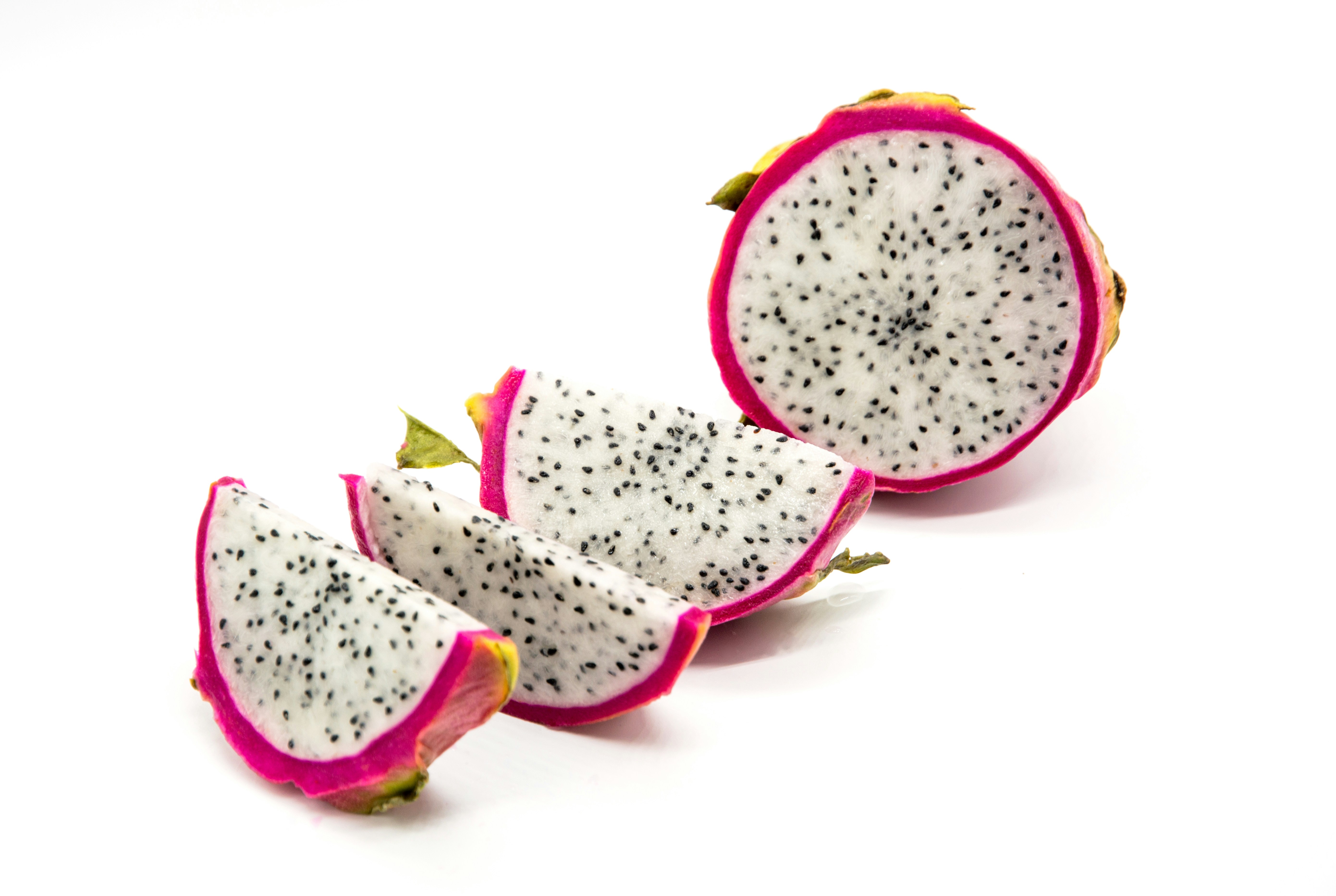
Una fruta que es mucho más que su belleza
A fruit that's much more than its beauty
La pitahaya (dragon fruit) ha conquistado mercados internacionales no solo por su apariencia exótica y llamativa, sino por un perfil nutricional extraordinario. Es baja en calorías, rica en fibra, repleta de vitaminas y con propiedades antioxidantes, probióticas y antiinflamatorias comprobadas.
Dragon fruit has conquered international markets not only for its exotic and striking appearance, but for an extraordinary nutritional profile. It's low in calories, high in fiber, packed with vitamins, and has proven antioxidant, probiotic, and anti-inflammatory properties.
Perfil nutricional (por 100g de pulpa)
Nutritional profile (per 100g of flesh)
Beneficios clave comprobados
Key proven benefits
1. Poderoso antioxidante
1. Powerful antioxidant
La pitahaya es rica en betacianinas (especialmente la Taiwan Red), vitamina C y flavonoides. Estos compuestos neutralizan los radicales libres que dañan las células y aceleran el envejecimiento. Estudios muestran que los pigmentos rojos de la Taiwan Red tienen mayor capacidad antioxidante que la vitamina C de referencia.
Dragon fruit is rich in betacyanins (especially Taiwan Red), vitamin C, and flavonoids. These compounds neutralize free radicals that damage cells and accelerate aging. Studies show that the red pigments in Taiwan Red have greater antioxidant capacity than reference vitamin C.
2. Prebiótico natural para la microbiota intestinal
2. Natural prebiotic for gut microbiota
La fibra oligofructosa de la pitahaya actúa como alimento para las bacterias beneficiosas del intestino (Lactobacillus y Bifidobacterium). Consumirla regularmente mejora la digestión, reduce el estreñimiento y fortalece el sistema inmune. Este efecto prebiótico la convierte en una aliada ideal para la salud digestiva.
The oligofructose fiber in dragon fruit acts as food for beneficial gut bacteria (Lactobacillus and Bifidobacterium). Consuming it regularly improves digestion, reduces constipation, and strengthens the immune system. This prebiotic effect makes it an ideal ally for digestive health.
3. Control del azúcar en sangre
3. Blood sugar control
A pesar de su sabor dulce, la pitahaya tiene un índice glucémico relativamente bajo comparado con otras frutas tropicales. La fibra enlentece la absorción de azúcares, lo que la hace apta para personas con diabetes tipo 2 cuando se consume con moderación. Investigaciones preliminares sugieren que puede reducir la resistencia a la insulina.
Despite its sweet taste, dragon fruit has a relatively low glycemic index compared to other tropical fruits. The fiber slows sugar absorption, making it suitable for people with type 2 diabetes when consumed in moderation. Preliminary research suggests it may reduce insulin resistance.
4. Rica en hierro y vitamina C
4. Rich in iron and vitamin C
La pitahaya contiene hierro no hémico y vitamina C, una combinación perfecta: la vitamina C aumenta hasta 3 veces la absorción del hierro vegetal. Esto la convierte en una fruta especialmente útil para personas con anemia ferropénica o dietas vegetarianas y veganas.
Dragon fruit contains non-heme iron and vitamin C, a perfect combination: vitamin C increases iron absorption by up to 3 times. This makes it an especially useful fruit for people with iron deficiency anemia or vegetarian and vegan diets.
5. Salud cardiovascular
5. Cardiovascular health
Las semillas negras de la pitahaya son ricas en ácidos grasos omega-3 y omega-9, beneficiosos para el corazón. La fibra soluble ayuda a reducir el colesterol LDL. Los estudios en animales muestran reducción de triglicéridos y mejora del perfil lipídico con consumo regular de pitahaya.
The black seeds of dragon fruit are rich in omega-3 and omega-9 fatty acids, beneficial for the heart. Soluble fiber helps reduce LDL cholesterol. Animal studies show reduced triglycerides and improved lipid profiles with regular dragon fruit consumption.
Vietnam White vs Taiwan Red: ¿cuál es más nutritiva?
Vietnam White vs Taiwan Red: which is more nutritious?
Ambas son nutritivas, pero tienen diferencias importantes. La Taiwan Red tiene mayor concentración de betacianinas (pigmentos antioxidantes) que le dan su color rojo intenso. La Vietnam White tiene un perfil similar pero con menos pigmentos rojos. Para máximo beneficio antioxidante, la Taiwan Red es la ganadora. Para consumo diario y versatilidad culinaria, la Vietnam White es excelente.
Both are nutritious, but they have important differences. Taiwan Red has a higher concentration of betacyanins (antioxidant pigments) that give it its intense red color. Vietnam White has a similar profile but with fewer red pigments. For maximum antioxidant benefit, Taiwan Red wins. For daily consumption and culinary versatility, Vietnam White is excellent.
Cómo consumirla
How to eat it
- Fresca, cortada a la mitad y con cuchara
- En smoothie bowls con granola y otras frutas tropicales
- Jugos y batidos naturales
- Ensaladas de frutas y ceviche de frutas
- Postres gourmet: mousse, sorbete, pavlova
- Fresh, cut in half and eaten with a spoon
- In smoothie bowls with granola and other tropical fruits
- Natural juices and smoothies
- Fruit salads and fruit ceviche
- Gourmet desserts: mousse, sorbet, pavlova
Prueba la pitahaya de Tropical Dragon Fruits
Try Tropical Dragon Fruits's dragon fruit
Sin pesticidas, sin químicos. Cosechada fresca y entregada directamente de nuestra finca.
No pesticides, no chemicals. Freshly harvested and delivered directly from our farm.