¿Por qué empezar con un esqueje?
Why start with a cutting?
La pitahaya se puede propagar por semilla o por esqueje. Sin embargo, los esquejes ofrecen ventajas clave: producen fruta en 12–18 meses (vs. 5–7 años por semilla), mantienen exactamente las características genéticas de la planta madre y, en el caso de nuestros esquejes autopolinizables, garantizan producción sin necesidad de otra variedad.
Dragon fruit can be propagated by seed or cutting. However, cuttings offer key advantages: they produce fruit in 12–18 months (vs. 5–7 years from seed), maintain exactly the genetic characteristics of the mother plant, and — in the case of our self-pollinating cuttings — guarantee production without needing another variety.
Paso 1: Selección y curado del esqueje
Step 1: Selection and curing of the cutting
Un buen esqueje mide entre 30 y 50 cm, proviene de una planta madre sana y productiva, y tiene al menos 1–2 años de madurez. Antes de sembrar, deja reposar el esqueje en un lugar ventilado y con sombra por 5–7 días para que el corte cicatrice (cure). Esto reduce el riesgo de hongos y pudrición.
A good cutting measures 30–50 cm, comes from a healthy, productive mother plant, and has at least 1–2 years of maturity. Before planting, let the cutting rest in a ventilated, shaded spot for 5–7 days so the cut heals (cures). This reduces the risk of fungi and rot.
Paso 2: Preparación del suelo
Step 2: Soil preparation
La pitahaya prefiere suelos bien drenados, ligeramente ácidos (pH 6–7), ricos en materia orgánica. Prepara una mezcla de:
Dragon fruit prefers well-drained, slightly acidic (pH 6–7) soils, rich in organic matter. Prepare a mix of:
- 60% tierra negra o suelo de jardín
- 20% compost maduro
- 20% arena gruesa o perlita (para mejorar el drenaje)
- 60% black soil or garden soil
- 20% mature compost
- 20% coarse sand or perlite (to improve drainage)
Evita suelos arcillosos compactos que retengan agua excesiva — la pitahaya es un cactus y puede morir por exceso de humedad en la raíz.
Avoid compact clay soils that retain excessive water — dragon fruit is a cactus and can die from excess moisture at the root.
Paso 3: Sistema de tutorado
Step 3: Trellis system
La pitahaya es una planta trepadora que necesita soporte. Existen dos sistemas principales:
Dragon fruit is a climbing plant that needs support. There are two main systems:
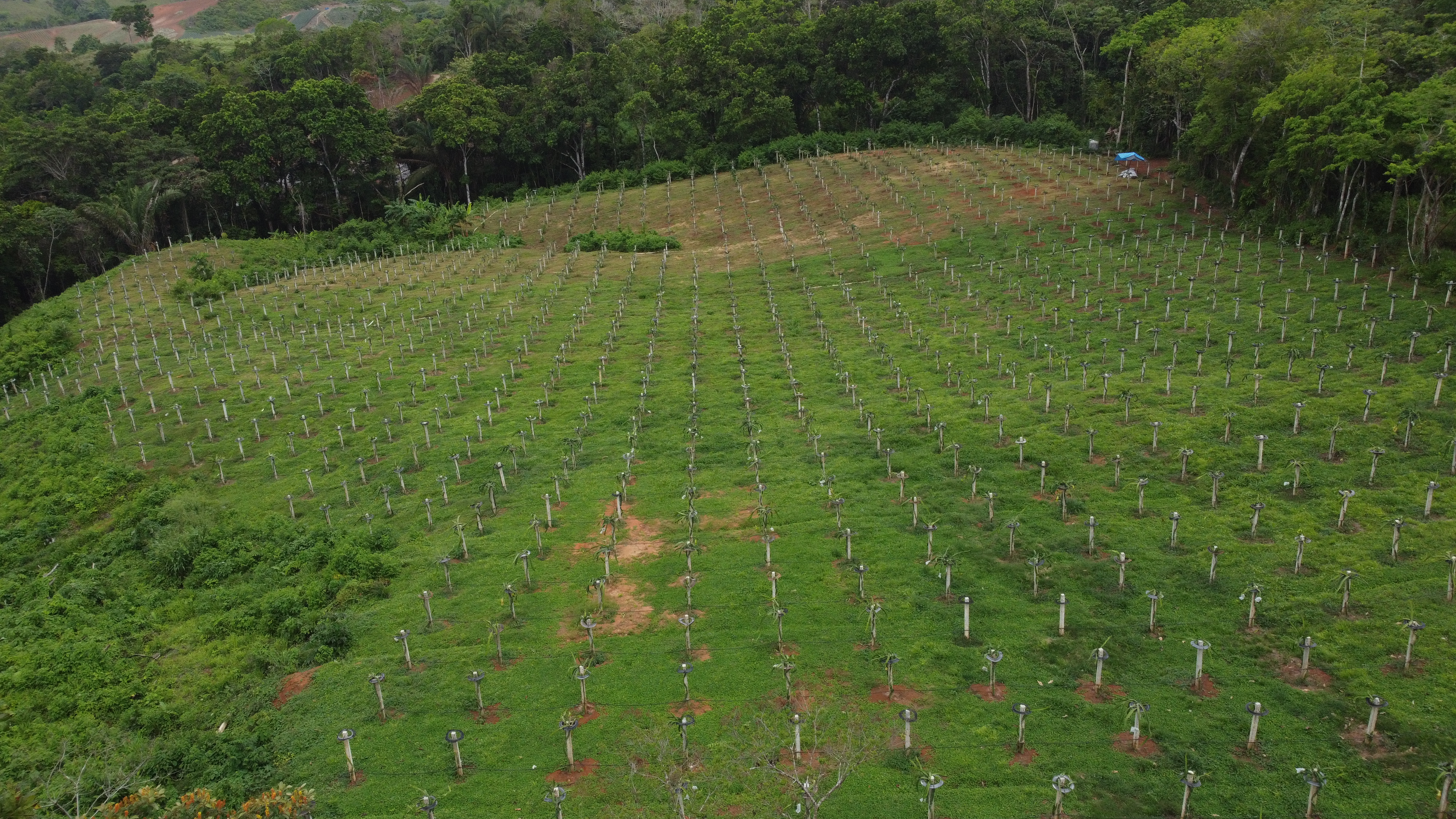
- Poste vertical con sombrilla: Un poste de 1.5–2m con una plataforma circular en la cima. Alta producción por planta, fácil cosecha.
- Espaldera horizontal: Varios postes con alambres. Ideal para grandes extensiones y mecanización parcial.
- Vertical post with umbrella: A 1.5–2m post with a circular platform at the top. High production per plant, easy harvest.
- Horizontal trellis: Several posts with wires. Ideal for large areas and partial mechanization.
En Tropical Dragon Fruits usamos postes verticales con sombrilla, que maximizan la producción por metro cuadrado.
At Tropical Dragon Fruits we use vertical posts with umbrella tops, which maximize production per square meter.
Paso 4: Siembra y riego
Step 4: Planting and irrigation
Siembra el esqueje curado a 5–8 cm de profundidad en el suelo preparado, junto a la base del tutor. El riego debe ser moderado: la pitahaya tolera la sequía pero no el encharcamiento. Riega cada 3–5 días en época seca y reduce en época lluviosa. El riego por goteo es ideal para mantener humedad constante sin saturar.
Plant the cured cutting 5–8 cm deep in the prepared soil, next to the base of the support. Irrigation should be moderate: dragon fruit tolerates drought but not waterlogging. Water every 3–5 days in the dry season and reduce during rainy season. Drip irrigation is ideal for maintaining constant moisture without saturation.
Paso 5: Fertilización natural
Step 5: Natural fertilization
Durante los primeros 6 meses, aplica compost o humus de lombriz cada 30 días. Una vez establecida la planta (a partir del mes 6), puedes agregar:
During the first 6 months, apply compost or worm castings every 30 days. Once the plant is established (from month 6 onward), you can add:
- Té de compost (rico en nitrógeno) para estimular crecimiento vegetativo
- Ceniza de madera (potasio) para fortalecer raíces y flores
- Harina de hueso (fósforo) para estimular floración y fruto
- Compost tea (nitrogen-rich) to stimulate vegetative growth
- Wood ash (potassium) to strengthen roots and flowers
- Bone meal (phosphorus) to stimulate flowering and fruiting
¿Cuándo esperar la primera cosecha?
When to expect the first harvest?
Con esquejes autopolinizables de buena calidad y condiciones ideales, la primera floración ocurre entre los 12 y 18 meses. Desde la floración hasta la fruta madura toman 30–35 días. La pitahaya florece de noche — sus flores abren al atardecer y cierran al amanecer. Esta es una de las razones por las que los esquejes autopolinizables son tan valiosos: no dependen de insectos polinizadores nocturnos.
With good quality self-pollinating cuttings and ideal conditions, the first flowering occurs between 12 and 18 months. From flowering to ripe fruit takes 30–35 days. Dragon fruit blooms at night — its flowers open at dusk and close at dawn. This is one of the reasons why self-pollinating cuttings are so valuable: they don't depend on nocturnal pollinating insects.
Consejo de Tropical Dragon Fruits
Tropical Dragon Fruits tip
Si estás en Panamá u otro país tropical con temperatura promedio sobre 22°C, tus condiciones son ideales para la pitahaya. La clave del éxito es el drenaje, el tutorado y la paciencia. ¡Y empezar con un esqueje autopolinizable de calidad!
If you're in Panama or another tropical country with average temperatures above 22°C, your conditions are ideal for dragon fruit. The key to success is drainage, trellis support, and patience. And starting with a quality self-pollinating cutting!
¿Listo para empezar tu plantación?
Ready to start your plantation?
Tenemos esquejes certificados de Vietnam White y Taiwan Red disponibles. Envío nacional e internacional.
We have certified Vietnam White and Taiwan Red cuttings available. Domestic and international shipping.